
People do not become brand advocates because a company asks them to. They do it because a brand gives them something useful, distinctive, or emotionally true to carry into another conversation. That is a higher bar than satisfaction. Plenty of customers are satisfied, then get on with their day.
Advocacy starts when someone believes that sharing the story makes them more helpful, more interesting, or more connected to the people around them. A recommendation can be as small as telling a friend which mechanic to trust or as public as bringing a whole community into a cause. Either way, it is a decision to spend social capital on your behalf.
That is why a brand should not treat advocacy as a social-media tactic. It is the result of a clear promise, a memorable experience, and a story that makes sense in the real world. The goal is not to make everyone talk. The goal is to give the right people a reason to talk when it matters.
What makes someone a brand advocate?
A brand advocate can be a customer, employee, partner, fan, or member of a community. The common thread is voluntary belief.The U.S. Small Business Administration distinguishes advocates from paid influencers by that motivation: advocates share because they want to help someone find something good, not because a contract requires the next post.
That does not make paid partnerships wrong. They can introduce a brand to an audience that would not encounter it otherwise. But the relationship needs to be honest. The Federal Trade Commission says material brand relationships should be clearly disclosed. Clear disclosure protects the audience, the creator, and the brand itself.
Earned advocacy is different because it cannot be bought into existence. It has to be deserved. A person has to be able to say, in their own voice, “This is worth knowing about,” and mean it.
Give people a story, not a slogan
The easiest thing to repeat is not always a tagline. It is a compact story with a point of view: the local shop that does one thing better than anyone expects, the team that refused the usual approach, the product that solved an irritating problem without making a fuss about it.
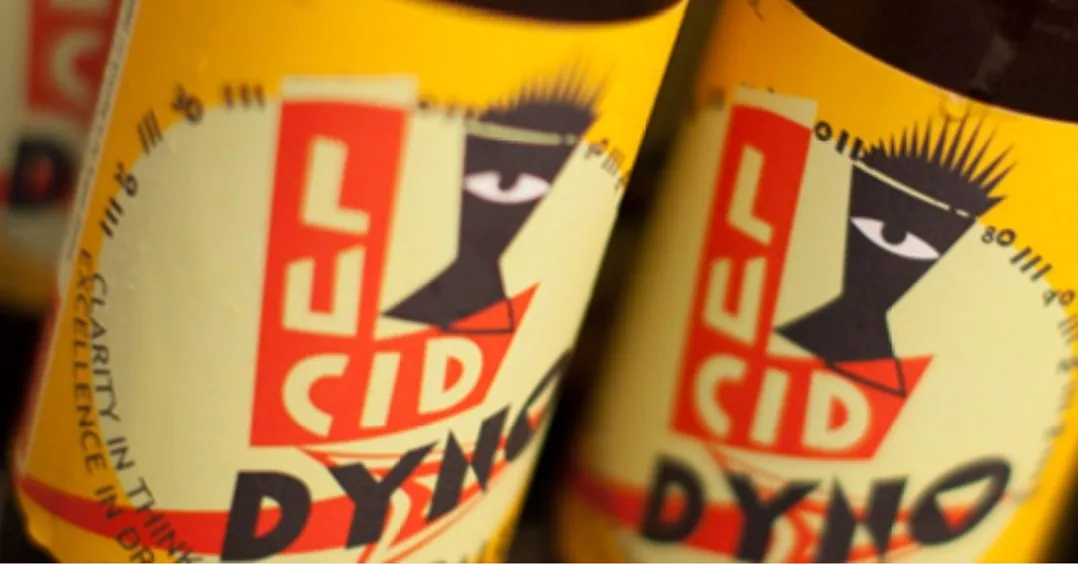
The work for Lucid Brewing made this tangible with a fictional Italian advocate named Lorenzo Lucid. The character gave a young brewery a piece of theater people could repeat, argue about, and invite friends into. The execution was playful, but the principle was serious: a brand needs a story that has enough character to travel without a media plan attached.
To find that story, stop asking what you want to say and start asking what a customer would be pleased to repeat. A useful test is whether the idea can survive a dinner-table retelling. If it takes six slides to explain, it is probably not ready to become conversation.
Build the experience behind the recommendation
Good stories collapse when the experience underneath them does not hold up. Advocacy is not an escape hatch for a weak offer. It is an amplifier for a promise people can verify for themselves.
Start by naming the moments where your audience feels the gap between ordinary and remarkable: the first call, the first use, the response when something goes wrong, the detail a customer did not expect you to notice. Those moments are more valuable than a broad request for “engagement” because they give people evidence.
Reviews are one example. Research in the Journal of Computer-Mediated Communication found that specific, well-reasoned reviews are more useful to other readers. That tracks with common sense: a vague compliment is nice; a concrete account gives someone else a reason to trust the choice.

Make advocacy easy to recognize and reward
Do not treat an advocate as a conversion event. Treat them as a person who has already given you a gift: attention, trust, and an introduction. The first response should be appreciation, not a demand for more content.
Look for the people who recommend you without prompting, ask smart questions, bring others along, or use your work to make their own communities better. Invite them closer in a way that creates real value: early access to useful information, a chance to shape the next offering, an invitation to a small event, or simple thanks that proves someone noticed.
For Lunds & Byerlys, food became more than a weekly errand through a seasonal story that made people want to participate. The lesson is not that every brand needs an event. It is that people are more likely to advocate for something they can join, not just consume.
Give employees a role they can believe in
Customers notice when the people inside a company sound like they are reading a script. Employees become credible advocates when they have a clear point of view, the permission to speak like people, and work they are proud to stand behind.
This requires more than handing everyone a content calendar. Bring the people closest to customers into the work early. Let them pressure-test the promise. Give them language they can make their own, not lines they have to memorize. When the internal story is thin, the public story will be thin too.
The 2026 Edelman Trust Barometer special report on brands frames relevance as a mix of utility, identity, community, and emotional connection. That is a useful lens for internal advocacy too. People need to see both what the brand does and why it has a place in their world.
Turn good feeling into an advocacy loop
Most organizations lose the moment right after someone says something kind. A customer leaves a thoughtful review, a partner makes an introduction, an employee tells a useful story in public, and the response is either automated or invisible. That is a missed opportunity. Advocacy grows when people can see that their contribution landed somewhere.
Build a simple loop around the signals that matter. First, listen for detailed praise, referrals, questions that show real interest, and stories people tell without being prompted. Second, respond in a way that fits the scale of the gesture. A personal note may be more meaningful than a discount code. Third, learn from the language they used. The words customers choose are often clearer than the words in a brand brief because they describe the value they actually felt.
The next step is not to turn every advocate into a spokesperson. It is to offer the right next invitation. Someone who writes a useful review might be happy to advise on a customer story. A partner who keeps making introductions might want a small gathering that brings more good people together. An employee who explains the work with clarity may be the best person to help shape how the company talks about itself.
Keep the exchange voluntary and specific. “Share our post” asks for free distribution. “Tell us which part of the experience made you recommend us” starts a real conversation. The first treats people like reach. The second treats them like people with a point of view. Brands that understand the difference build a stronger base of belief over time.
This is also where a little restraint helps. Do not ask for a review before the work has proved itself. Do not pressure a customer to say more than they mean. And do not turn a private moment of appreciation into public content without permission. The short-term gain is never worth making a sincere advocate feel used.
Finally, bring the learning back into the business. Share the best stories with the people designing the product, serving customers, and planning the next campaign. That keeps advocacy from becoming a report that lives in marketing. It becomes a practical source of direction: a reminder of what people value enough to repeat and what the brand needs to protect as it grows.

Measure the actions that prove belief
A recommendation score can be useful, but it is only the beginning of the conversation. A high score without a reason leaves the creative work unfinished. Ask what people would say, who they would say it to, and which part of the experience they would bring up first.
Then watch for behaviors that involve a little effort: a qualified referral, a detailed review, a repeat mention, a customer willing to tell their story, an employee sharing a useful perspective, or a partner inviting the brand into a new room. These are better signs of advocacy than a like that disappears overnight.
The Minnesota Lynx campaign was built around a fierce point of view, not a generic request for attention. When a brand gives people a clear stance they can identify with, the signal becomes easier to spot in the wild: people carry it forward because it says something about them too.

How Chris helps brands earn advocacy
The work is not to manufacture enthusiasm. It is to uncover the truth worth building around, give it a form people can remember, and make sure the experience backs it up. That can mean a sharper brand story, a campaign with a real point of view, or a room where the people closest to the work find a shared way forward.
Chris brings that approach to brand consulting, workshops and keynotes, and the ideas in Awareness Without Advertising. Each starts in the same place: a brand does not earn attention by asking for it. It earns attention by giving people something they are glad to pass on.
For a brand that feels too quiet, too familiar, or too easily ignored, start a conversation with Chris.
Frequently asked questions
What is a brand advocate?
A brand advocate is a customer, employee, partner, or community member who chooses to recommend a brand because the experience or idea is worth sharing. The advocacy may happen in conversation, a review, a referral, a post, or a room where a decision is being made.
Are brand advocates the same as influencers?
Not usually. An influencer relationship is often paid and built around reach. Brand advocacy is earned through a real belief in the product, experience, or point of view. Both can be useful, but paid relationships need clear disclosure and should not be confused with an unsolicited recommendation.
How do you measure brand advocacy?
Start with evidence of voluntary action: qualified referrals, useful reviews, repeat mentions, customer stories, employee participation, and invitations to bring others in. A recommendation score can be a helpful signal, but it should lead to a conversation about why people would recommend you.
Can a small business build brand advocates?
Yes. A small business can often do it more directly because customers know the people behind the work. The key is to be specific about the promise you keep, notice who is already talking about you, and give them an honest story that is easy to repeat.