

Creative direction
Creative Director Consultant
For teams with consequential work in motion who need a stronger idea, a sharper call and a more coherent way forward.
Talk to ChrisThe work needs a point of view
Bring in a creative director before good work becomes expensive work.
There is a moment in a launch, campaign or brand change when the facts are all present, the team is capable and the calendar is full, but nobody can say what should lead. The brief has become a list. The concepts are polished but interchangeable. A message gets revised until it is technically safe and emotionally empty. That is not a production problem. It is a creative decision that has not been made clearly enough.
Chris Birt works as a creative director consultant for teams that need experienced judgment close to an important assignment. He helps find the truth worth building around, choose the direction with the most potential and give the people making the work a practical standard they can use. The result is not another layer of commentary. It is a clearer way to move from a promising idea to work that can earn attention.
The role can be focused and direct: a candid review before a campaign goes into production, a working session to reset a launch, a creative brief that gives an agency something real to build from, or hands-on guidance as an idea becomes visible. The scale follows the decision. What matters is making the decision before the work gets louder.
Find the pressure
Identify the customer tension, business change or category habit that gives the assignment a real reason to exist.
Make the call
Choose a creative direction strong enough to guide concepts, language, design and production without becoming a vague mood board.
Protect the idea
Keep the direction intact as the work moves between leaders, agencies, writers, designers and production partners.
A useful outside perspective
Get clear on what the work has to make people feel, see or do.
A creative director consultant does more than improve the surface of the work. The useful question comes earlier: what response does this business need to earn, and what idea gives people a reason to respond? When that answer is weak, teams compensate with more messages, more revisions and more activity. When it is clear, the work gets easier to judge. A writer knows which claim matters. A designer knows what the visual system must protect. A marketing lead can tell the difference between a busy calendar and a meaningful signal.
Chris starts with the live pressure, not a predetermined process. A founder may need a new offer to enter the market with more confidence. A marketing team may have a good strategy that has not found a customer-facing expression. An agency may need a senior partner who can make the hard call between two decent routes before a production budget turns the decision into a compromise. The work can include creative review, campaign direction, message shaping, a sharper brief, film or photography direction, or the practical bridge between a big idea and the next visible piece of work.
That is different from asking someone to decorate a decision that has already been made. Chris helps make the decision itself more useful. He looks for the proof, tension and point of view that can make a customer pause, understand the value sooner and have something worthwhile to repeat. The strongest creative work does not demand attention by force. It gives people a reason to notice because it makes a meaningful point.
A direction people could join
Turn cultural discovery into an invitation.
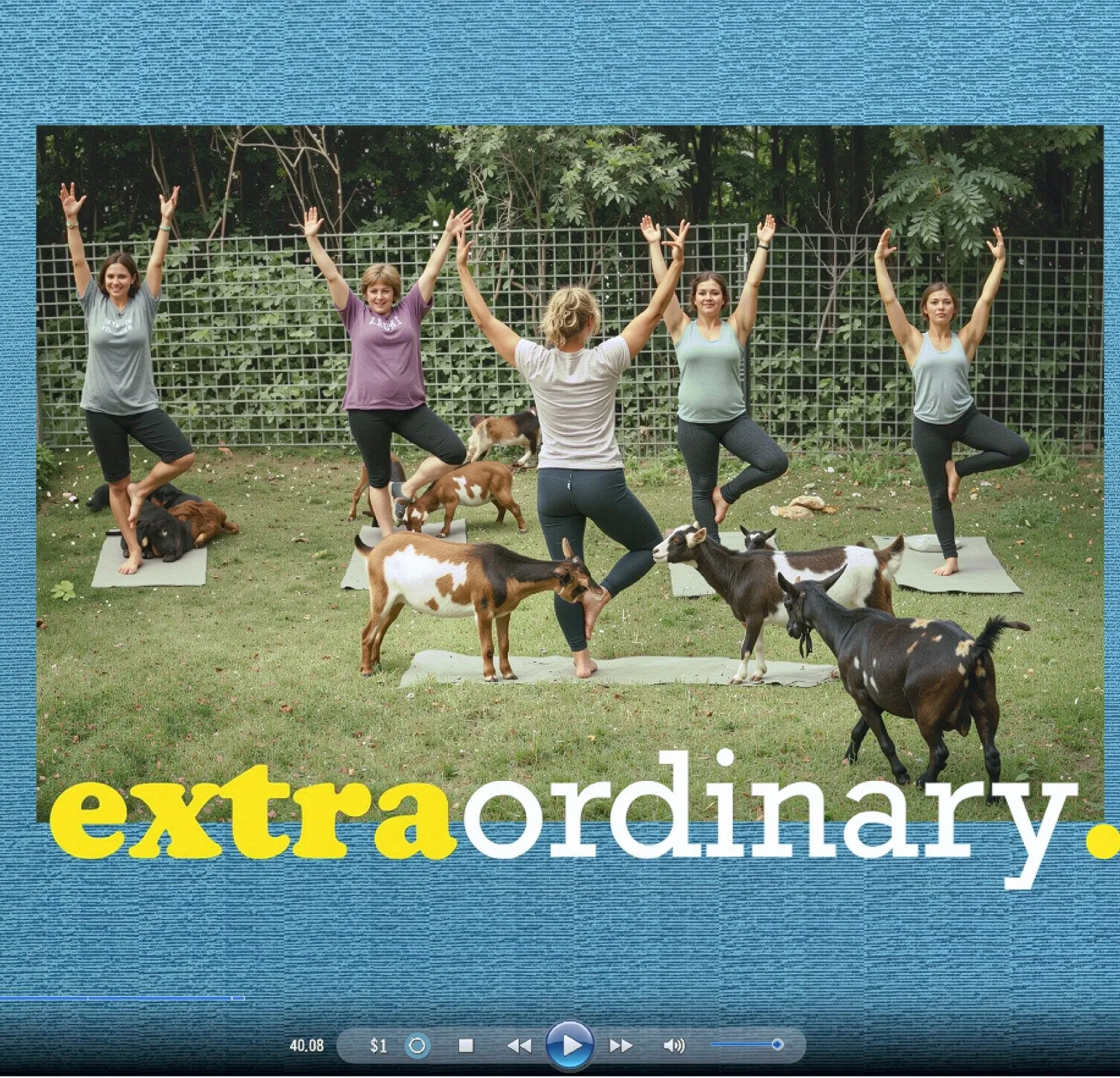
For the American Swedish Institute, the challenge was not a shortage of programs or history. It was giving people a reason to see cultural discovery as lively, surprising and worth joining. Chris developed “Extra ordinary,” a point of view that found the unexpected in everyday Swedish culture and turned it into a clear creative invitation.
The idea became short films, social work and a larger campaign. It gave the organization a recognizable way to speak, and gave the audience something they could share without being asked to repeat institutional language. The social following grew by 2,000 percent in the year after launch, including a jump from 1,600 to 26,000 Facebook followers.
That is the test for creative direction: the work should change what happens next. It should give a team a stronger way to decide, and give an audience a clear reason to pay attention. The form can change from a film to a sales story to a campaign. The central idea still has to carry.
See the American Swedish Institute workDesigned for the moment that matters
Use senior creative judgment where a default answer will not do.
Some assignments need a fresh start. The business has changed, but the public story still belongs to an earlier version of the company. Some need a decisive review. The team has options, but none is strong enough to carry the investment behind it. Others need stewardship through the handoff. The strategy is sound, yet every new partner pulls the work a little closer to familiar category language.
Chris can meet the team at the point of highest leverage. He can help frame the real challenge before concepts begin, pressure-test an emerging direction, make sure the proof supports the promise and keep the work connected while it becomes a campaign, a launch, a film, a customer experience or a set of materials people have to use every day. His experience spans agency leadership, brand strategy and creative production, so the direction is built to survive real constraints, not just look convincing in a presentation.
For the Minnesota Lynx, that meant refusing the lazy assumption that the WNBA was a lesser version of the NBA. The campaign put the team’s real passion at the center and gave fans and local media a more forceful point of view to respond to. Walk-up ticket sales increased 43 percent within a year. The project was not successful because it had more assets. It was successful because the work made a clear, credible statement that people could recognize and carry forward.
This is also why Chris keeps the engagement proportional. A focused creative-director consultation can give a team the clarity to take the next step itself. When the work needs senior leadership across several initiatives and a longer period, the right fit may be a fractional creative director. When the brand needs a broader decision about what it should stand for, brand strategy consulting may be the better place to begin. The right role is the one that makes the actual decision easier to make.
From a strong idea to visible work
Make the direction useful after the meeting is over.
Creative direction only earns its place if it improves the work after the conversation ends. Chris helps teams move from a promising thought to decisions people can actually make: what to emphasize, what to leave out, which proof makes the story believable, how to keep a campaign from sounding like the category and where the creative energy belongs.
For Lunds & Byerlys, the task was to make groceries feel connected to culture. “Food fashion” gave seasonal work an unexpected frame and made a familiar category feel more expressive. The idea came to life through an 80-foot runway show built over supermarket cash registers, followed by international press coverage. It was an unusual execution, but it began with a simple creative call: food is part of a customer’s cultural life, not merely another errand.
Chris can work directly with the person responsible for the decision, alongside an internal team, or with the agency and production partners carrying it out. The point is not to replace capable people. It is to give them a more useful standard, so the work holds together when the pressure, budget and opinions arrive.
See the Lunds & Byerlys work
Frequently asked questions
What does a creative director consultant do?
Chris gives a team experienced creative judgment around a live decision. He can help find the central idea, sharpen the brief, choose between directions, strengthen concepts and keep the work connected as it moves into writing, design, film, photography or production.
When should we bring in a creative director consultant?
Bring Chris in when the assignment matters but the work feels scattered, safe or difficult to explain. That may be before a launch, during a campaign reset, when a team needs an honest review or when several capable partners need one useful standard for the work.
How is this different from a fractional creative director?
A consulting engagement is focused on one important decision, campaign or stretch of work. Fractional creative direction is a continuing leadership role across a longer period. Chris can work in either shape, depending on how much senior direction the team needs.
Can Chris work with our internal team or agency?
Yes. Chris can work directly with a founder or leader, alongside internal marketing and creative teams, or with an agency and production partners. The goal is to make the existing team more decisive, not add another approval layer.
Give the work a stronger creative hand.
Tell Chris what is about to launch, what has become unclear or where the team needs a sharper call.
Talk to Chris