If you want people to talk about your work or brand in a meaningful, even profitable way, take a picture or type a headline. While “storytelling” and film also work, these take longer and require more effort.
AI can make a picture, but it can’t take a picture. You can enhance a photo with AI to make a point (also called retouching, see Ansel Adams or Sebastian Salgado, for starters).
You will need a perspective if you plan to make a point, or as Ken Hedrich, the dean of American architectural photography, once said, “I don’t take a picture, I think a picture.” Conveying your perspective is easier to do with buildings than with people, because it’s hard to capture a moment in time.
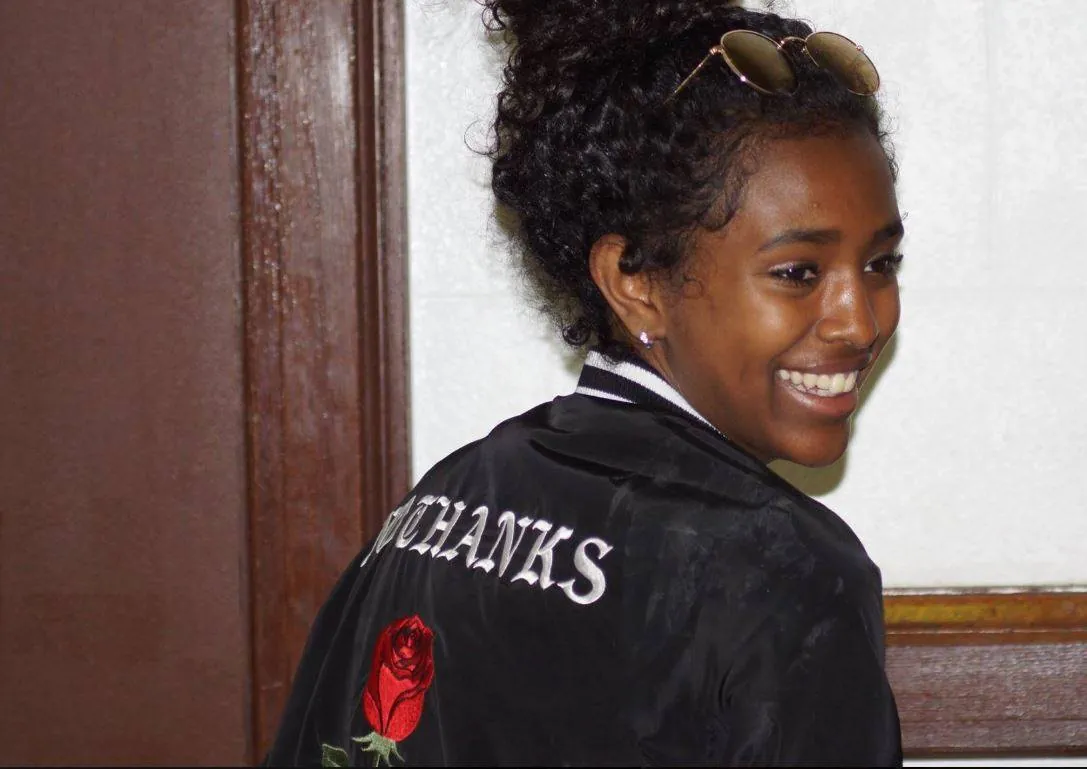
The two images below are from an exhibit on the George Floyd riots in Minneapolis, MN. The first is a photograph, the second is an AI-enhanced picture. I used AI to visually illustrate my point that confusion, rather than clarity, defined those few days. While subtle, the enhanced picture accentuates the young woman's angst.
I realize this goes against the prevailing zeitgeist, which suggests that Minneapolis looked just like Portland, with tightly focused rage against the machine, but the reality was more nuanced. While this remains a purely qualitative assumption, I have questioned why, of the 800,000 views my pictures have received on YouTube recently, this image is the most discussed. And the buzz only increased once I accentuated it.
My goal for this post is not to convince you of my perspective, but that I strategically and creatively doubled down on it to increase buzz.
Words. Not Deeds.
Protest photography rarely makes good branding unless you are a QB taking a knee. Yet pictures, alone among media, can do as much as AI in a single moment.
And we all know how much AI can do. It is all action. You cannot out-deed it. Fortunately, you can still out-think it when it comes to choosing words that make people talk about your brand. Take comfort in the words of Futurist George Gilder when he says that " AI is a machine, and the last thing a machine wants is a surprise. Machine thinking is no match for the counterfactuals, whims, and flights of fancy conjured up by humans." (Gilder, 2023)
Gilder's prognosis about machines applies to these early days of AI. Certain words, or in our case, headlines, can surprise them, particularly when they are used out of context. As they learn more about what humans find “creative,” like calling a car a lemon to illustrate quality or thinking really small (see below), the machines will adapt. That does not mean you can’t keep throwing a wrench into things.
Future Lessons from the Past.
Before Ms. Sweeney and Southern Cuisine, the above ad launched the world's most talked-about campaign. It's also a real ad, unlike the rubbish people talk about today. (To see more of such advertising, please follow Brian Burch on LinkedIn .)
This one ad, first published in 1959, challenged the zeitgeist of the time. Turning the VW’s diminutive size (a negative) into a positive sparked a new conversation about an industry obsessed with size. This Chrysler ad from the same time period offers context.
Don’t start a new conversation.
Starting meaningful and entirely new conversations in branding is challenging, and in the age of AI, it is unnecessary. Seriously. To achieve maximum awareness at minimal cost, you should hack your way into conversations that are already being had.
F. Scott Fitzgerald said that when people tell you that they like how you write, what they are really saying is “I like how you think.” This is particularly true when your words comport with their own thinking, trigger a belief, or change some conventional wisdom.
Let’s take one more trip back in history to showcase my point.
The above work was designed to encourage traffic to the lakeside City of Excelsior, MN, in 2003. I’ve written about it in all my books because it generated over $2 million in audited free press from only a $6900.00 investment (the cost of the ad and placement in a free magazine).
While the city's Chamber thought the lack of an Ann Taylor, Starbucks, and blacktop instead of cobblestones was hurting tourism, the retail zeitgeist for 18–34-year-old trendsetters had shifted. They were now talking about how big box retail was creating a “sea of sameness,” so I helped the city join that conversation with an unorthodox (for tourism) campaign.
Go on. Be a hack.
If you want to know more about a marketing technique called “growth hacking,” it gets complicated quickly. I cover branding applications in my book, but if you really want to do technical growth hacking, I suggest you look into Coursera. (I did).
The most straightforward way to hack into a story is by newsjacking, where you reach out to editors and opinion makers before a story gets big. If you don't like talking to the press, I'd be happy to do it for you, but don't be surprised if I tell you to think small.
In so many words.
Or pictures.
See you next week.
CItation:
Gilder, George. Life After Google: The Fall of Big Data and the Rise of the Blockchain Economy. Washington, DC: Regnery Gateway, 2023