
The most useful customer advocacy examples do not start with a campaign. They start with a person deciding that an experience is worth putting their own name behind. That might mean a detailed review, an introduction to a colleague, a story told in a meeting, or candid feedback that helps a business make something better.
These actions look different, but they have one thing in common: they require more than a quick reaction. The customer gives time, context, or social capital because the experience feels useful enough to pass along. A business cannot force that kind of belief, but it can make it easier to notice, respect, and learn from.
The five examples below are practical starting points for service businesses, retailers, professional firms, and larger teams. The goal is not to collect more praise. It is to create a better loop between what people experience, what they choose to say, and what the business does next.
What makes an example worth copying?
A real advocacy example has three parts: a specific customer moment, a voluntary contribution, and a useful response from the business. A vague five-star rating is pleasant, but a review that explains the problem, the decision, and the result gives the next customer something they can actually evaluate.
That is why the customer should remain the main character. Strong customer stories lead with the person's challenge and the change they experienced, not a list of product features. The same rule applies to referrals, advisory groups, and communities. Make the contribution useful to the person making it, not merely useful to the company receiving it.
Teams can use the practical definition of customer advocacy to distinguish genuine action from ordinary satisfaction. The test is simple: would someone still make this recommendation, share this detail, or give this feedback if no one required it? If the answer is yes, there is something worth understanding.

1. A detailed review that helps the next buyer
The most familiar customer advocacy example is a detailed review. Not a generic rating, but a short account that helps another person decide whether the business is right for their situation. It may explain what the customer needed, why they chose the business, what surprised them, and what changed afterward.
A local firm might ask a recent client, "What would you want a friend facing the same problem to know before they call us?" A retailer might ask which detail made a purchase feel worthwhile. A consultant might ask which part of a working session made the decision clearer. Each question invites substance rather than demanding applause.
The right response is simple: say thank you, make it clear the feedback was heard, and pay attention to the language. If several customers independently describe the same benefit, that phrase may be more credible than anything the business writes for itself. Thebrand advocacy measurement guide explains how to track review detail and recency alongside the raw count.
2. A qualified referral between people who trust each other
A referral is stronger than a contact form submission because someone has placed their own reputation behind the introduction. The best referrals are not broad pleas to "send anyone you know." They are a specific connection between a person who has seen the work and another person who has a relevant problem.
Picture a former client telling a colleague, "You should talk to Chris. He helped us find the idea underneath the noise, and the team finally had language they could use." That is an advocacy example because it carries a real outcome in the customer's own words. It gives the new prospect a reason to take the first conversation seriously.
The business side of the exchange matters. Thank the referrer personally. Keep the follow-up respectful. Do not make the customer manage the sale or explain the whole offer for you. A useful referral process records where the introduction came from, whether it was a good fit, and what the person said made the business worth recommending.
3. A customer story with a clear before and after
A customer story goes beyond a quote because it shows how a real problem changed over time. The strongest version is specific: what was difficult before, what decision the customer made, what they experienced, and what happened next. It gives a future customer context rather than asking them to take a claim on faith.
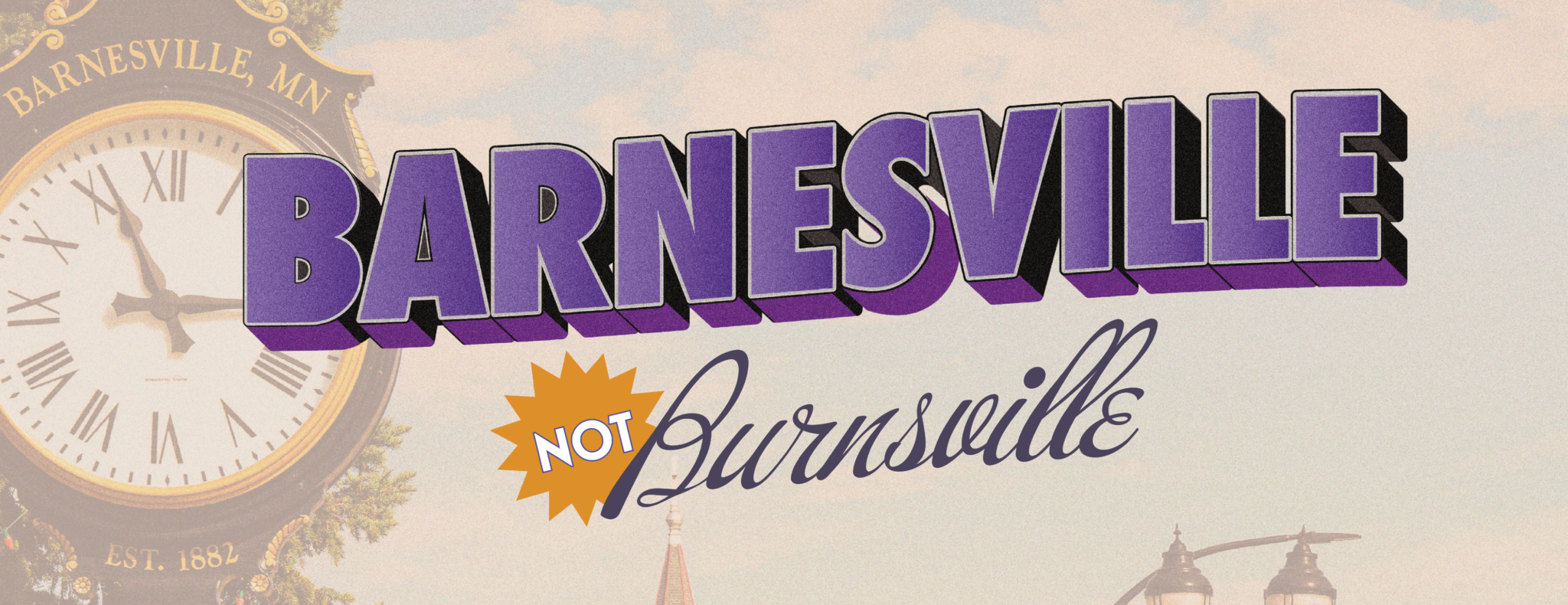
Chris's work with Willow Creek is an example of a story people could carry forward. The agency was often confused with a larger suburb. Instead of hiding the problem, the campaign made "Barnesville, Not Burnsville" the point. It gave the community a line that was true, local, and easy to repeat.
Customer stories need permission and care. Interview the customer about the work in their own terms. Keep enough detail to make the story believable, including limits or tradeoffs when they are relevant. Then let the customer approve the final version before it becomes public. That protects trust and makes the story more useful than a polished but anonymous testimonial.
4. An advisory conversation that improves the work
Advocacy is not only outward-facing. A customer who gives thoughtful feedback on a service, product, event, or message can help a team avoid expensive assumptions. An advisory conversation might be a quarterly discussion with a few long-term clients, a post-project debrief, or a short session with people who use the work every day.
The important part is the question. Instead of asking, "Do you like us?" ask, "Where did the experience make your job easier, and where did it ask too much of you?" A good answer exposes both the promise that is working and the friction that could weaken the next recommendation.
Close the loop afterward. Tell participants what changed, what needs more work, or why a suggestion could not be acted on yet. People are more likely to give useful guidance again when they can see that their time was treated as expertise, not extracted as free research.

5. A community moment that lets customers help each other
A community can become customer advocacy when people share practical experience with one another, not when a business fills a feed with promotional prompts. It may be a customer panel, a workshop, a small event, a peer introduction, or a useful conversation after a talk. The format matters less than whether participants are given room to speak in their own voice.
The Minnesota Lynx campaign offers a useful lesson in creating something people wanted to identify with. The work gave a young team a fierce point of view, rather than a generic request for attention. Communities form around beliefs and experiences people can recognize in themselves. A brand becomes part of that conversation by contributing something specific, not by trying to control every word.
For a smaller business, this could be as simple as bringing a few customers together around a problem they already care about. Give them a useful reason to show up, listen for the questions they ask each other, and resist the urge to turn every moment into a sales pitch. The most credible conversations leave room for honest views.
Choose one example that fits the relationship
A business does not need to launch all five examples at once. Start with the action that naturally follows a moment of value. A home service company may begin with a detailed review after a successful job. A professional firm may focus on qualified referrals. A B2B team may get more value from customer stories or a small advisory group. A community-minded brand may be ready to host a useful gathering.
Match the ask to the person. Someone who does not want to appear in a public case story may still offer a private reference conversation. A customer who would never make a referral may write the most useful review. The customer advocacy program guide can help teams decide whether a repeatable structure is actually needed.
Above all, protect the honesty that makes advocacy valuable. TheFederal Trade Commission advises that review incentives must not depend on positive sentiment. Ask for an honest experience, not a predetermined answer. A customer who trusts the process is far more likely to give feedback that helps the business and the next buyer.
Turn one example into a working habit
Choose the moment first. For example, a design firm might ask for a review two weeks after a launch, once the client has had time to see the work in the world. A home service business might ask after a repair has held through a season. A consultant might follow up after the client's team has put the workshop decisions into practice. The best moment is when the value is fresh and the customer has enough perspective to describe it honestly.
Next, make one precise invitation. A request such as "Would you be open to sharing what made this useful?" is easier to answer than a generic appeal for a review. For a referral, ask whether someone in the customer's circle is facing the same challenge. For an advisory conversation, ask for thirty minutes around one decision the team is trying to improve. Specific invitations respect the person's time and make the contribution easier to picture.
Finally, decide how the business will respond before the first ask goes out. Someone should thank the customer, record the useful detail, and share the learning with the people who can act on it. Without that response, a good story disappears into an inbox and the customer is left wondering why they bothered. The customer advocacy strategy guideshows how to turn those individual moments into a repeatable practice without making the relationship feel automated.
Avoid the mistakes that make advocacy feel transactional
The most common mistake is asking too early. A person who has just bought, signed, or started using something may not have enough experience to offer a useful perspective. Give the relationship time to produce a real outcome. The second mistake is asking everybody for the same thing. A detailed reviewer, a thoughtful adviser, and a well-connected referrer are not interchangeable roles.
Another mistake is editing away the details that make a customer story believable. A glowing quote that could describe any business rarely helps anyone. Let customers use their own language, preserve the useful specificity, and do not publish a story without clear permission. Credibility comes from the reality of the experience, not from turning every sentence into a slogan.
The final mistake is treating advocacy as something marketing owns alone. The signals often appear first with the salesperson, project lead, service technician, event host, or customer support team. Give the whole group a simple way to spot a useful moment and pass it along. That creates a fuller picture of what people value enough to recommend.
How Chris helps turn a good experience into a story people carry
The work behind advocacy is not a referral gimmick. It is the harder work of finding a clear point of view, shaping an experience that lives up to it, and giving people language they can naturally repeat. That can mean a stronger brand position, a campaign with more character, or a team that sees the customer moment more clearly.
Chris brings that work into brand consulting, hands-on brand strategy workshops, and the campaign stories in his portfolio. For a closer look at the actions worth tracking once the work is in motion, continue with how to drive customer advocacy.
Frequently asked questions
What is an example of customer advocacy?
A customer advocacy example is a voluntary action that helps another person make a better decision or helps the business improve. It can be a detailed review, a qualified referral, a customer story, participation in an advisory group, or an answer shared with a peer community.
What is the difference between a testimonial and customer advocacy?
A testimonial is one form of proof, usually a short endorsement. Customer advocacy is broader. It includes the customer's willingness to share an honest experience, make an introduction, provide feedback, join a reference conversation, or help shape the next version of the work.
Can a small business use customer advocacy?
Yes. A small business does not need a formal platform or a large member program. It can start by noticing successful customer moments, asking one appropriate question, responding with genuine thanks, and learning from the language people use when they recommend the business.
Should a business reward customer advocates?
A business can thank customers or offer a fair referral benefit, but it should never make a reward depend on positive feedback. The safest approach is to ask for an honest perspective, disclose any incentive where appropriate, and make it easy for the customer to decline.